For inventory inquiries, please contact your local branch at (214) 630-8360.
Share
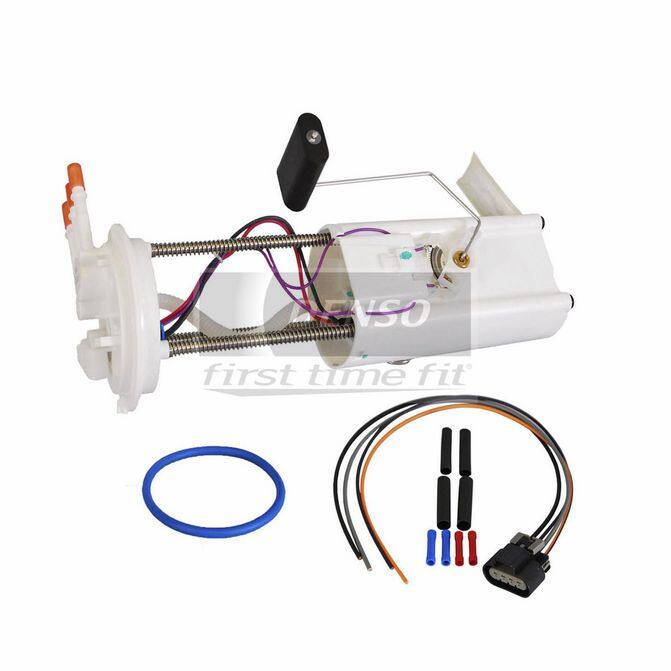
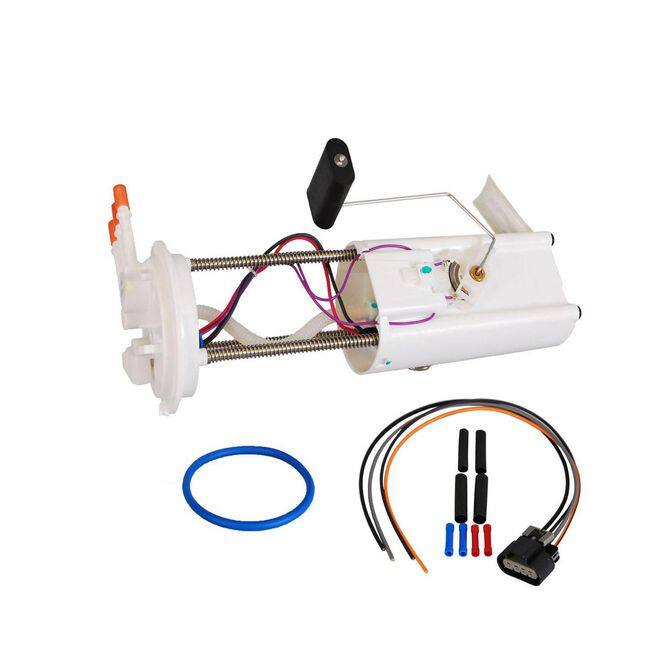
The DENSO 953-0018 Fuel Pump Module Assembly is engineered to deliver reliable fuel delivery in demanding commercial vehicle applications. Designed for specific compatibility with Chevrolet Express 2500/3500 and GMC Savana 2500/3500 models from 1997 to 2002, this assembly ensures optimal fuel pressure and flow, contributing to consistent engine performance and operational efficiency. DENSO's proprietary turbine pump technology is at the core of this module, providing the highest sustained fuel pressures in the industry. The open-vane impeller design offers superior efficiency compared to traditional closed-vane impellers, resulting in reduced power consumption and prolonged service life. This design innovation not only enhances fuel delivery but also minimizes the risk of pump failure, a critical factor in maintaining uninterrupted fleet operations. The module's construction includes a precision-balanced armature, which significantly reduces noise and vibration during operation. This feature is particularly beneficial in commercial vehicles, where prolonged exposure to mechanical noise can lead to driver fatigue and decreased comfort. By ensuring quieter operation, the DENSO 953-0018 contributes to a more comfortable driving environment, potentially improving driver satisfaction and retention. Installation of the DENSO 953-0018 Fuel Pump Module Assembly is straightforward, thanks to its direct-fit design tailored for the specified vehicle models. This ease of installation reduces downtime during maintenance, allowing fleet vehicles to return to service promptly. Additionally, the module is built to meet or exceed original equipment manufacturer (OEM) specifications, ensuring durability and reliability that fleet operators can trust. By choosing the DENSO 953-0018 Fuel Pump Module Assembly, fleet operators invest in a high-quality component that addresses common fuel delivery challenges, such as inconsistent fuel pressure and potential pump failures. The module's efficient design and reliable performance contribute to the overall operational efficiency of the fleet, reducing maintenance costs and enhancing vehicle uptime. This investment in quality components translates to measurable value for fleet operations, supporting the bottom line and ensuring vehicles remain on the road where they are needed most.
High-efficiency open-vane impeller design
Precision-balanced armature for reduced noise and vibration
Direct-fit installation for specified vehicle models
Meets or exceeds OEM specifications for durability and reliability






 Quick Order