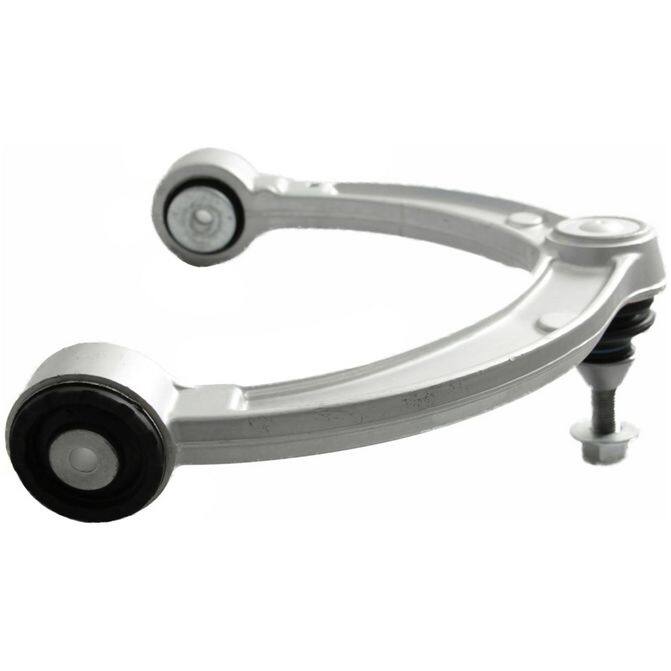
The Delphi TC3054 Front Right Upper Control Arm and Ball Joint Assembly is engineered to meet Original Equipment (OE) standards, ensuring precise fitment and reliable performance for a range of vehicle applications. This assembly plays a critical role in maintaining proper wheel alignment and suspension geometry, which are essential for vehicle stability and handling. By replacing worn or damaged control arms with the Delphi TC3054, fleet operators can restore optimal suspension function, leading to improved ride quality and handling characteristics. The assembly is constructed from high-strength materials, featuring precision-engineered pivot points and finishes that resist corrosion, ensuring exceptional durability and seamless joint movement. Each Delphi control arm undergoes thorough crack detection and ultrasonic flaw testing to guarantee compliance with OE standards. The assembly includes a ball joint, which is integral to the suspension system, allowing for controlled movement between the control arm and the steering knuckle. This design ensures that the wheel maintains proper alignment during suspension travel, contributing to consistent handling and tire wear. The inclusion of the ball joint in the assembly simplifies the replacement process, reducing labor time and potential for installation errors. Fleet operators can benefit from the Delphi TC3054 by experiencing reduced downtime associated with suspension repairs and enhanced vehicle performance. The assembly's robust construction and OE-quality materials contribute to a longer service life, minimizing the frequency of replacements and associated maintenance costs. Additionally, the precision engineering of the control arm and ball joint assembly ensures that the vehicle's suspension system operates as intended, maintaining optimal wheel alignment and handling characteristics. By choosing the Delphi TC3054 Front Right Upper Control Arm and Ball Joint Assembly, fleet operators invest in a high-quality component that addresses common suspension issues, leading to improved vehicle performance, reduced maintenance costs, and enhanced driver satisfaction.






 Quick Order