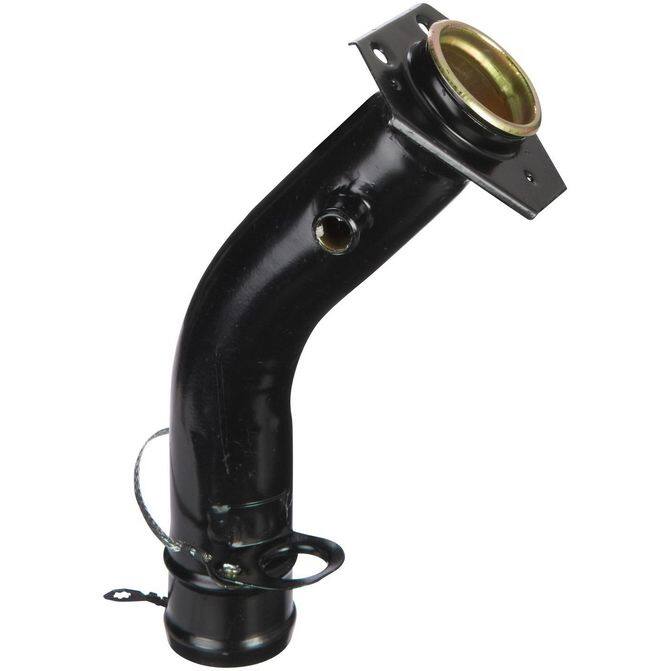
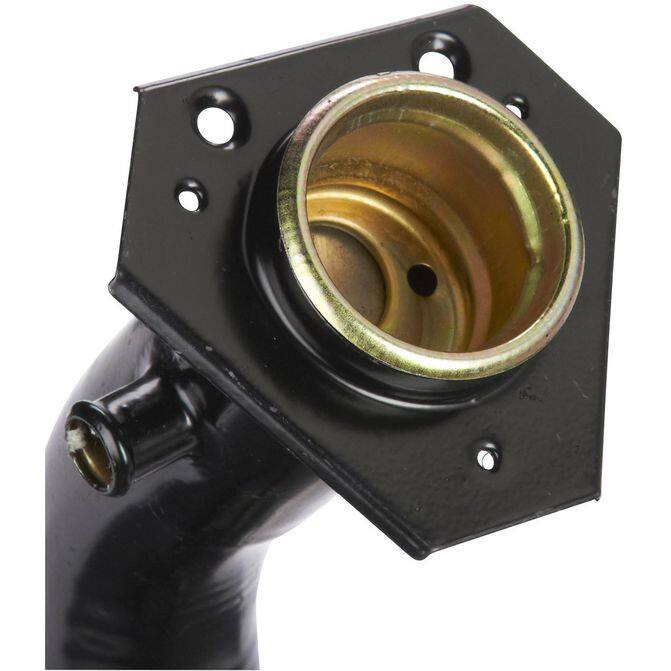
The Spectra Premium Industries, Inc. FN506 Fuel Tank Filler Neck is engineered to meet original equipment (OE) specifications, ensuring a precise fit and reliable performance. Designed with a length of 10.75 inches and an inside diameter of 2 inches, this steel fuel filler neck is a critical component in the fuel delivery system, facilitating the safe and efficient transfer of fuel from the filler cap to the fuel tank. Its construction leverages Spectra Premium's extensive expertise in fuel system design, providing a solution that addresses common issues such as corrosion and leakage, which can lead to fuel system contamination and operational inefficiencies. The FN506 is dual-coated for enhanced corrosion protection, a feature that significantly extends the component's lifespan and maintains the integrity of the fuel system. This dual-coating process involves applying a special conductive paint to dissipate static charges, thereby preventing electrostatic discharge (ESD) that could potentially ignite fuel vapors. Additionally, the filler neck is equipped with a ground wire to further mitigate the risk of ESD, ensuring a safer refueling process. To guarantee a proper fit and ease of installation, the FN506 is fit-tested on the specific vehicle application for which it was developed. This rigorous testing process verifies that the design fits properly and can be easily installed, reducing downtime and labor costs associated with the replacement process. After production, each unit undergoes leak testing to ensure it is free from fuel and evaporative leaks, thereby preventing potential fuel system contamination and maintaining operational efficiency. The FN506 is also tested with an OE fuel cap to prevent evaporative emission and check engine light failure, addressing common issues that can arise from component incompatibility. By choosing the Spectra Premium Industries, Inc. FN506 Fuel Tank Filler Neck, fleet operators can ensure the reliability and longevity of their vehicles' fuel delivery systems, thereby reducing maintenance costs and minimizing operational disruptions.






 Quick Order