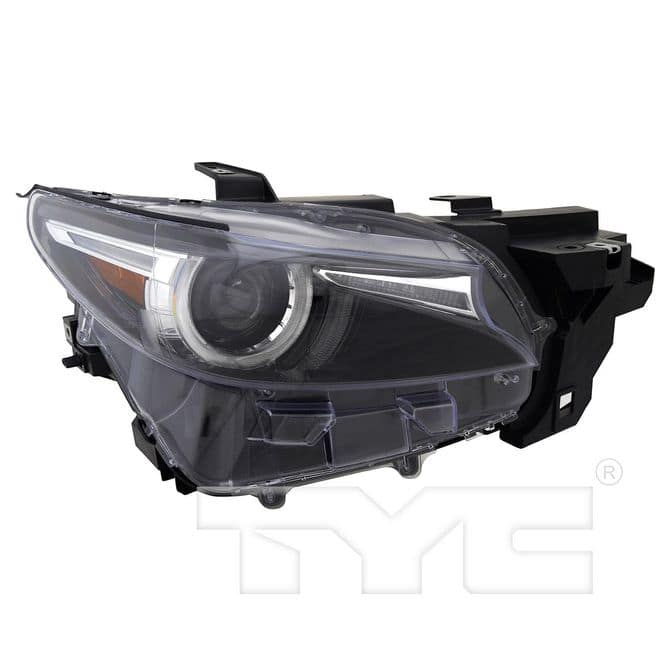
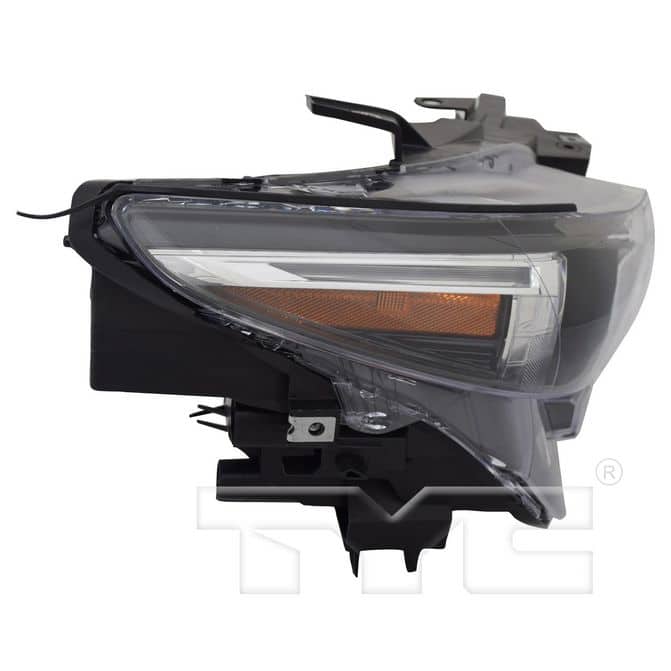
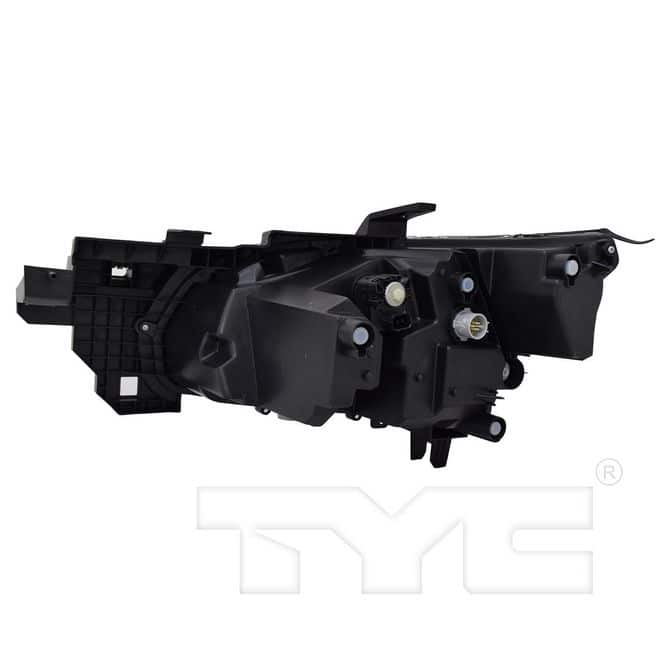
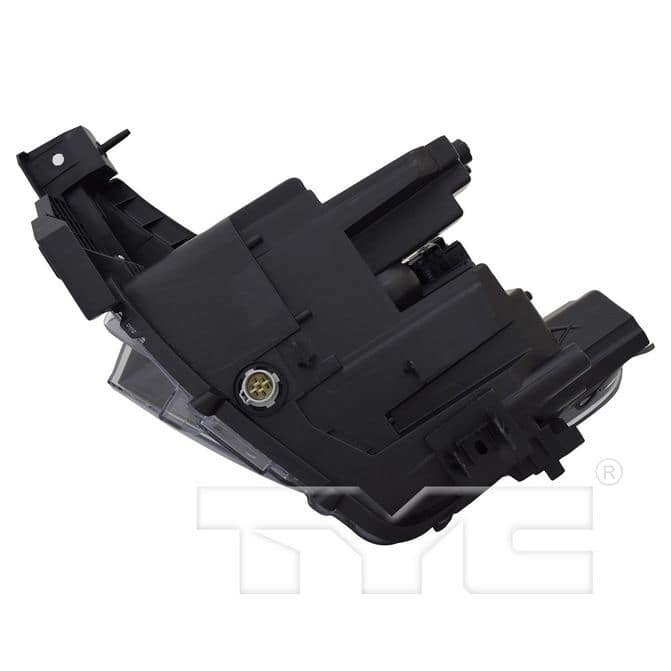
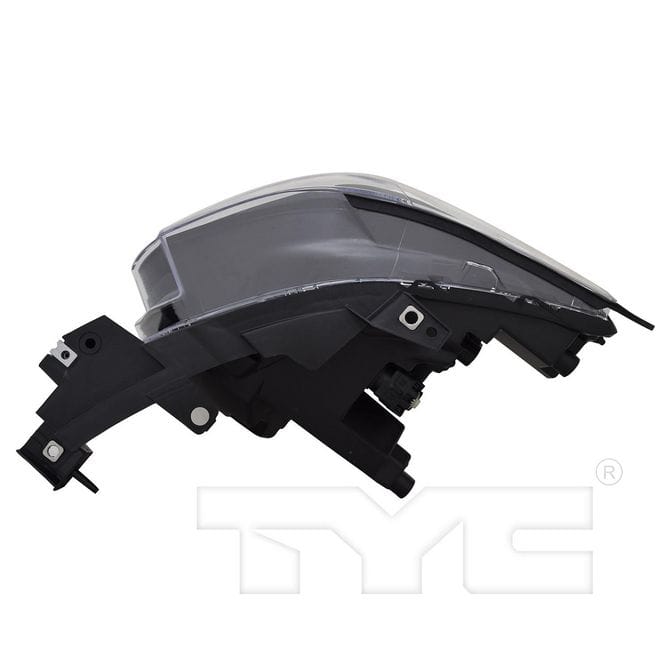
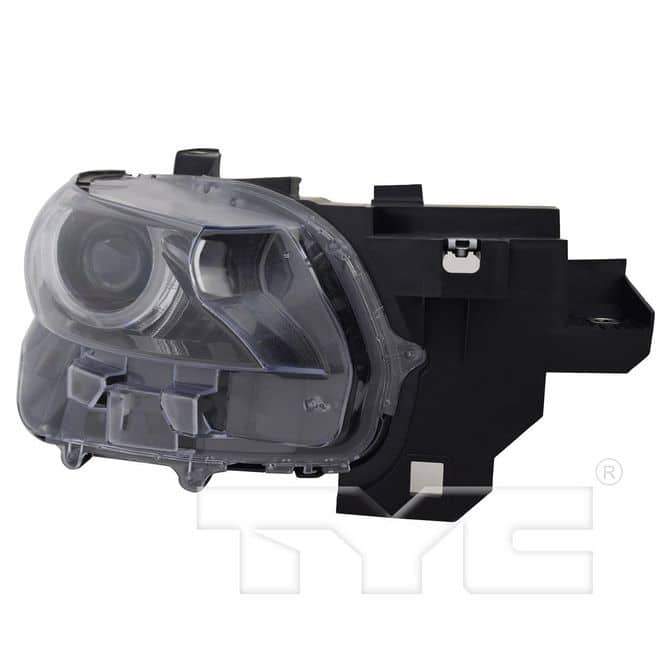
The TYC 20-9867-00 Right Passenger Side Headlight Assembly is engineered to meet the specific lighting requirements of the 2016-2023 Mazda CX-9 equipped with the Adaptive Front Lighting System (AFS). This assembly ensures optimal illumination and safety, enhancing the driving experience for operators and passengers alike. Designed as a direct replacement for the original equipment, it offers a seamless fit and reliable performance, minimizing downtime and maintenance costs for fleet operations. The assembly includes LED low and high beam bulbs, a front side marker light, and a front signal light, all integrated into a single, durable housing. The housing is constructed from high-quality PP plastic, providing resistance to impact and environmental factors, thereby extending the product's lifespan. The lens is made of PC plastic with a clear finish, ensuring maximum light transmission and visibility. The assembly is DOT/SAE compliant, meeting or exceeding FMVSS 108 standards for photometry and safety compliance. This compliance guarantees that the headlight performs at a level consistent with original equipment, ensuring proper illumination and safety. The assembly also features OE-comparable fasteners and mounting tabs, facilitating precise fitment and hassle-free installation. This design consideration allows maintenance teams to perform replacements efficiently, reducing labor costs and vehicle downtime. Rigorous cycling tests have been conducted to ensure the assembly's quality and durability, confirming its ability to withstand the demands of regular use. The manufacturing facilities are certified under ISO9001:2000 and QS9000 standards, indicating a commitment to quality and precision in production. A special coating on the lens prevents hazing and fading, maintaining clear visibility over time and reducing the need for frequent replacements. By choosing the TYC 20-9867-00 Right Passenger Side Headlight Assembly, fleet operators invest in a high-quality, durable, and efficient lighting solution that enhances vehicle safety and minimizes operational disruptions.
Direct replacement for 2016-2023 Mazda CX-9 Right Passenger Side Headlight Assembly
Includes LED low and high beam bulbs, front side marker light, and front signal light
Constructed with high-quality PP plastic housing for impact resistance
Clear PC plastic lens with special coating to prevent hazing and fading
DOT/SAE compliant, meeting FMVSS 108 standards for photometry and safety
OE-comparable fasteners and mounting tabs for precise fitment and easy installation
Rigorous cycling tests ensure quality and durability
Manufactured in ISO9001:2000 and QS9000 certified facilities
Special coating on lens maintains clear visibility over time






 Quick Order